


Papillomavirus (HPV) is one of the most contagious diseases, transmitted from a carrier to a healthy person through household or sexual contact.
The main symptom of infection is the appearance of single growths or groups on several areas of the skin, which without proper treatment can spread to healthy parts of the body.To date, scientists have identified more than 100 types of HPV, and only half of them have been thoroughly studied.
Papillomavirus: how dangerous is this disease?
Despite the fact that small tumors do not cause much discomfort and in most cases are almost invisible, growths on the body can cause a more serious disease - skin cancer.
All types of papillomavirus are divided into two categories, depending on the location:
- papilloma;
- condyloma.
Papillomas appear on skin areas such as the chest, neck, hands and face, and condylomas are located in the genital area.The risk group for contracting such an infection includes not only women, but also men who like to roost.Another way of transmission of HPV is pregnancy and breastfeeding, where the virus is passed from mother to child through milk.
The main danger of papillomavirus is that the disease can trigger the development of cancer and therefore it is very important to detect the presence of the virus in the body at an early stage.This can be done using diagnostics, which will identify the infection and determine its type.After determining the type of virus, only the doctor will be able to tell which method is best to remove the papilloma.
Important!
The process of turning a benign neoplasm into a skin cancer begins with damage to the growth.After an injury to an infected area of the body, an inflammatory process begins, which can smoothly develop into oncology.
Papillomavirus treatment: professional method
Professional ways to combat growth include:
- nitrogen freezing;
- papilloma laser removal;
- chemical cauterization;
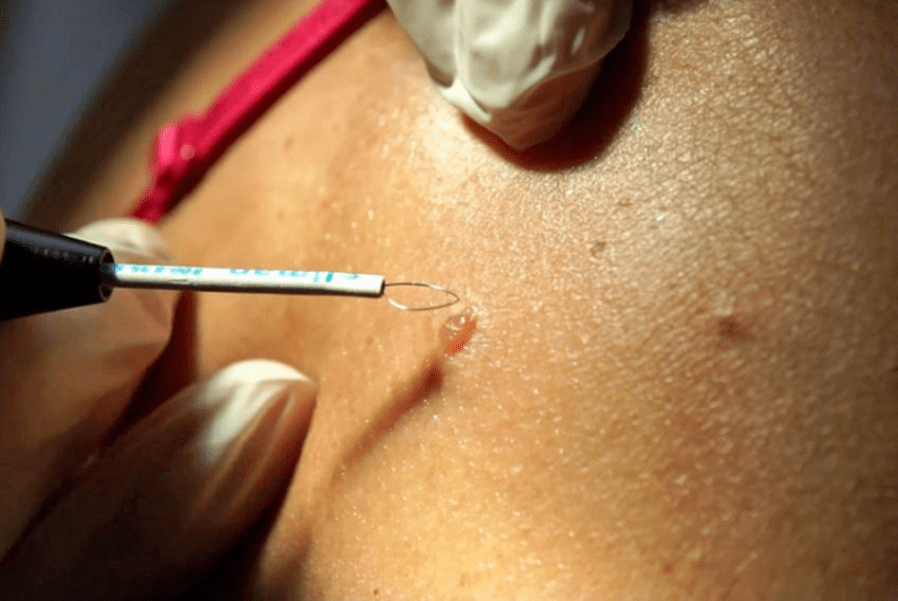
- treatment of the affected area with electric current.
Despite the high efficiency, when using professional methods, unpleasant situations often arise, for example, the reappearance of papillomas in the same area or the appearance of scars.
More radical methods of treating papilloma include surgery, which is prescribed in advanced cases especially.Indications for surgical intervention are as follows:
- rapid increase in the affected area of the body;
- the presence of malignant growth;
- the impossibility of removing papilloma with other available methods.
Liquid nitrogen treatment methods for papillomas
Cryodestruction is the freezing of neoplasms with nitrogen, which can be used regardless of the stage of development of the infection.The process of removing papillomas using cryodestruction takes a lot of time, because the patient has to go through several stages:
- tissue coagulation;
- waiting for the swelling to subside (temporary paralysis of the affected area is possible);
- rejection of frozen tissue;
- long regeneration process.
In total, it will take about six months to fully recover after papilloma removal using cryodestruction.
Important!
The use of liquid nitrogen is unacceptable in the presence of inflammation of internal organs and in the case of exacerbation of infectious diseases.Before visiting a cosmetology center, you should consult a doctor who will tell you about the possibility of using cryodestruction in certain cases.
Laser freezing
The use of laser beams has proven itself as a quick and painless way to remove papillomas.The advantages of laser freezing are as follows:
- no contact of the device with the human body, which ensures the complete sterility of the process;
- after removal there are no scars left on the body;
- The laser stimulates the cells in the damaged skin area to regenerate quickly.
Electrocoagulation
Removing papillomas using electric current is the only high-quality and painless process.This method is mainly used to fight benign tumors in the intimate area and on the face.
The essence of this technique is the effect of electric current on the papilloma, which destroys the vessels that feed it.Compared to cryodestruction, electrocoagulation does not leave any visible marks on the body.
Chemical combustion of growth
Using the method of removing papillomas using chemicals is not very popular in modern cosmetology, because its effectiveness is much lower than other methods.In addition, under the influence of chemicals, burns may appear on the skin, which will lead to an inflammatory process.
Self-removal of papillomas: which method is better?
If for some reason there is no desire to visit a beauty salon, and the tumor does not cause problems, then it is better to remove it yourself.Traditional methods consist of preparing various tinctures and ointments, which are often applied to the affected areas of the body and lead to the death of growth.
The easiest way to remove papilloma is to use a mixture of kerosene and walnuts.To do this, you need to grind peanuts in a meat grinder and pour kerosene into the finished mixture in a ratio of 2: 1. After preparation, the mixture is infused for three weeks and after this period is applied with a cotton swab to the papilloma.
Important!
Do not use tinctures with kerosene on the face or genital area.This can cause tissue burns and severe irritation.
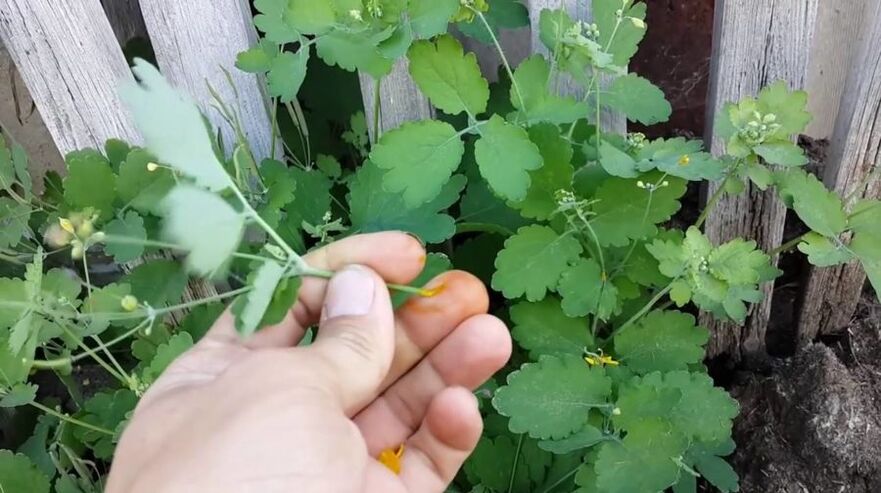
The next effective way to get rid of papillomas on your own is the use of celandine juice, which should be used to lubricate the tumor in the morning and before going to bed.The only contraindication in this case is individual intolerance to celandine.
If the papilloma is large, it can be tied with silk or cotton thread.This must be done after treating the growth with an alcohol solution.After a week, the papilloma, lacking blood supply, will dry up and disappear.